


US Customs Clearance and Import Duties for Amazon FBA Shipments


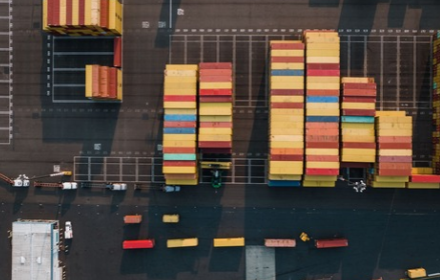
Shipping products to Amazon FBA warehouses in the United States involves more than international transportation. Sellers must also understand US customs clearance, import duties, importer of record requirements, and Amazon's delivery rules.
For sellers importing inventory from China, mistakes in customs documentation or duty payments can cause delays, additional costs, or rejected shipments.
This guide explains how US customs clearance works for Amazon FBA shipments, how import duties are determined, and how to prepare inventory for smooth delivery.
US customs clearance is the process of declaring imported goods to US Customs and Border Protection (CBP) and meeting applicable import requirements before the goods can enter the country.
For Amazon FBA shipments, the process typically includes:
Preparing commercial invoices and packing lists
Classifying products using the correct HTS codes
Declaring the customs value
Filing the required import entry
Paying applicable duties, taxes, and fees
Obtaining customs release
Arranging delivery to the Amazon fulfillment center
Customs clearance is separate from Amazon's warehouse receiving process. Even after customs releases a shipment, the goods must still meet Amazon's FBA shipping and preparation requirements.
The Importer of Record (IOR) is the party legally responsible for ensuring that imported goods comply with US customs requirements.
The IOR is responsible for:
Providing accurate import information
Ensuring regulatory compliance
Submitting or arranging the required customs entry
Paying applicable duties, taxes, and fees
Maintaining relevant import records
Amazon does not act as the IOR for FBA shipments. Sellers must act as the importer themselves or arrange for an eligible party to take on that role where legally permitted.
Foreign sellers may be able to act as nonresident importers, subject to applicable US requirements. A customs broker can help determine the appropriate setup.
Before shipping, confirm who will serve as the IOR and whose information will appear on the customs entry.
Accurate documentation helps customs brokers classify goods, calculate duties, and complete import declarations.
Common documents and information include:
Commercial Invoice: Seller, buyer, product descriptions, quantities, values, and currency
Packing List: Carton quantities, dimensions, weights, and packing details
HTS Codes: Product classification for US tariff purposes
Bill of Lading or Air Waybill: Transportation details
IOR Information: Legal name and relevant importer identification details
FBA Shipment ID: Reference connecting the shipment to the Amazon inbound shipment
Product Certifications or Permits: Where required by the product category
Additional documents may be required for regulated products or specific shipping arrangements.
Product descriptions should be clear and specific. For example, “stainless steel kitchen utensils” is more useful than simply writing “accessories.”
Amazon's import guidance also requires accurate invoice information and prohibits listing Amazon as the importer of record.
Import duties depend on the product's tariff classification, customs value, country of origin, and applicable trade measures.
The main factors include:
HTS Code: Determines the applicable tariff classification and duty rate
Customs Value: The value determined under US customs valuation rules
Country of Origin: Determines which origin-related tariffs or trade measures may apply
Additional Tariffs: Certain products may be subject to additional duties
Other Fees: Applicable customs processing fees and other charges
A simplified illustration is:
Estimated Import Duty = Dutiable Value × Applicable Duty Rate
For example, if the dutiable value is $10,000 and the applicable duty rate is 5%, the basic duty would be $500.
This is only an illustration, not a quote for a real shipment. Actual calculations depend on the applicable tariff provisions and any additional duties or fees.
For goods imported from China, check the current US tariff treatment before shipping. Rates can vary significantly by product and may change with trade policy. The US International Trade Commission's Harmonized Tariff Schedule is an important resource for researching tariff classifications.
The Harmonized Tariff Schedule (HTS) code is essential for determining the tariff treatment of imported products.
To identify the appropriate code:
Obtain a detailed product description from the supplier.
Identify the product's material, function, and composition.
Review the relevant HTS classification.
Check the general duty rate and any applicable additional tariffs.
Confirm the classification with a qualified customs broker when necessary.
Do not select an HTS code simply because it produces a lower duty rate. Incorrect classification can lead to additional duties, penalties, and customs delays.
For complicated products, a broker or customs specialist can help evaluate the correct classification before the goods leave China.
Amazon's US import guidance states that FBA inventory must arrive under DDP (Delivered Duty Paid) shipping terms, sometimes called free domicile.
Under a properly arranged DDP service, the shipping provider coordinates the agreed transportation and customs arrangements, and applicable import charges are paid before delivery.
A typical shipment may follow this process:
China Supplier → China Warehouse → Export Clearance → International Freight → US Customs Clearance → Amazon FBA Warehouse
Before accepting a DDP quotation, confirm that it covers:
International transportation
Customs brokerage
Applicable import duties and taxes
Relevant customs and destination fees
Delivery to the designated Amazon fulfillment center
DDP does not remove the need for a legally responsible importer or guarantee that every product is admissible. The IOR and other parties retain their respective legal responsibilities.
Amazon may refuse shipments arriving with collect charges, including unpaid duties, taxes, or shipping costs.
DDP and DAP allocate transportation and import responsibilities differently.
| Item | DDP | DAP |
|---|---|---|
| International freight | Usually included | Usually included |
| Import customs clearance | Seller's agreed arrangements | Buyer/importer's responsibility |
| Import duties and taxes | Seller's agreed arrangements | Buyer/importer generally pays |
| Delivery to destination | Included as agreed | Included as agreed |
| Suitable for standard US FBA delivery | Yes, when properly arranged | Not suitable if import charges remain unpaid |
DAP may be useful for other types of deliveries, but Amazon's US FBA import requirements call for DDP terms.
When comparing quotations, check the actual service scope rather than relying on the Incoterm label alone. Confirm who is responsible for the customs entry, duty payment, and final delivery.
Sellers should not assume that a shipment qualifies for duty-free treatment simply because its value is low.
US rules for low-value imports have changed, and eligibility depends on the applicable law and entry circumstances. A commercial shipment sent to an Amazon fulfillment center must meet the relevant customs requirements regardless of its intended use.
Before shipping, confirm:
Whether the shipment qualifies for any applicable low-value entry provision
Whether customs duties and additional tariffs apply
Which entry type is appropriate
What information must appear on the customs declaration
Whether any special restrictions or requirements apply
Do not split shipments, undervalue goods, or misdescribe products to avoid customs duties. These practices can result in enforcement action and additional costs.
Customs problems can delay inventory and increase costs before the goods reach Amazon.
Common causes include:
Incorrect or missing HTS codes
Inaccurate declared values
Incomplete commercial invoices
Missing importer information
Unpaid duties or fees
Restricted products without required permits
Inconsistent shipment details
Incorrect consignee or delivery information
Depending on the issue, customs may request additional documents, hold the shipment, or take other enforcement action. Amazon may also refuse inventory that does not meet its import or fulfillment requirements.
To reduce risk, provide your freight forwarder and customs broker with complete product information before booking. Confirm that the IOR, customs declaration, and delivery instructions are correct.
For sellers sourcing products from multiple Chinese suppliers, using a China-based logistics warehouse can simplify the shipping process.
A typical workflow is:
Step 1: Supplier Coordination
Collect product specifications, carton details, invoices, and relevant compliance documents.
Step 2: Warehouse Receiving
Receive products from suppliers and check carton quantities, labels, and shipment details.
Step 3: Consolidation and Preparation
Combine shipments where appropriate and arrange any required labeling, packaging, or preparation services.
Step 4: Customs Documentation
Confirm the HTS codes, declared values, IOR details, commercial invoice, and FBA Shipment ID.
Step 5: International Shipping
Select an appropriate sea or air freight service and arrange export clearance.
Step 6: US Customs Clearance
Submit the required import entry, pay applicable charges, and obtain customs release.
Step 7: Final Delivery
Arrange delivery to the designated Amazon fulfillment center in accordance with the shipment plan and appointment requirements where applicable.
Planning these steps in advance can reduce avoidable delays and make inventory replenishment easier to manage.
DIDADI Logistics helps businesses coordinate shipping and logistics operations from China to the United States.
Services can include:
China warehouse receiving
Supplier pickup and cargo consolidation
Warehouse handling and shipment preparation
Sea and air freight
DDP shipping coordination
Customs clearance arrangements
Delivery to Amazon FBA fulfillment centers
For sellers purchasing products from multiple suppliers, warehouse consolidation can simplify cargo management and reduce the need to coordinate several separate shipments.
Before booking, provide the product details, total weight, dimensions, carton count, destination fulfillment center, and any known customs requirements. This allows the logistics team to evaluate the appropriate shipping method and prepare a more accurate quotation.
Customs clearance and import duties should be planned before cargo leaves China, not after it arrives in the United States.
US customs clearance is an essential part of shipping inventory to Amazon FBA warehouses. Sellers need to understand the importer of record, prepare accurate documentation, use the correct HTS codes, and account for applicable import duties and fees.
For standard US FBA shipments, Amazon requires DDP shipping terms, but sellers must still ensure that the importer and customs arrangements comply with US law.
By confirming tariff requirements early, comparing complete shipping quotations, and working with an experienced logistics provider, businesses can better control landed costs and reduce avoidable shipping delays.
DIDADI Logistics supports China-to-US shipping, warehouse consolidation, and Amazon FBA delivery coordination, helping businesses manage the logistics process from China to their designated US fulfillment centers.
Recommended Reading