

China to Germany Sea Freight: Main Ports & Shipping Routes


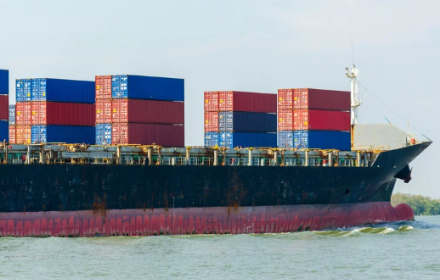
Shipping goods from China to Germany by sea is a common choice for importers, wholesalers, manufacturers, and e-commerce businesses. With several major export ports in China and multiple destination ports in Germany, choosing the right route can affect shipping costs, transit times, customs procedures, and final delivery arrangements.
This guide covers the main Chinese ports for Germany-bound cargo, Germany's key seaports, common shipping routes, and practical factors to consider when arranging FCL or LCL shipments.
China and Germany are connected by established container shipping networks. Cargo can move directly between major ports or through transshipment hubs, depending on the shipping line, service schedule, and port combination.
The most common sea freight options are:
FCL (Full Container Load): A full container reserved for one shipper's cargo.
LCL (Less than Container Load): Cargo consolidated with shipments from other businesses.
Port-to-port shipping: Cargo moves between the selected Chinese and German ports.
Door-to-door shipping: Transportation is arranged from the supplier's location in China to the consignee's address in Germany, with customs arrangements defined in the quotation.
Sea freight is generally suitable for larger shipments that are less time-sensitive. The best option depends on cargo volume, weight, destination, delivery requirements, and total logistics cost.
China has several major container ports serving Europe-bound cargo. The most suitable departure port usually depends on the supplier's location, available shipping services, inland transportation costs, and vessel schedules.
| Chinese Port | Location | Key Features |
| Shanghai Port | Shanghai | Major international container hub with extensive European connections |
| Ningbo-Zhoushan Port | Zhejiang | Important export gateway for eastern China |
| Shenzhen Yantian Port | Shenzhen, Guangdong | Major deep-water container terminal serving international routes |
| Shenzhen Shekou Port | Shenzhen, Guangdong | Convenient for cargo from Shenzhen and the Pearl River Delta |
| Guangzhou Nansha Port | Guangzhou, Guangdong | Key export gateway for Guangzhou and surrounding manufacturing areas |
| Qingdao Port | Shandong | Important northern China port with international container services |
| Tianjin Port | Tianjin | Main maritime gateway for Beijing, Tianjin, and parts of northern China |
| Xiamen Port | Fujian | Serves exporters in Fujian and nearby manufacturing regions |
How to choose a departure port
The nearest port is not automatically the cheapest option. Compare the complete origin-side cost, including supplier pickup, trucking, warehouse handling, export customs procedures, and port-related charges.
For example:
Suppliers in Shanghai and nearby areas may consider Shanghai or Ningbo.
Suppliers in Shenzhen and Dongguan may consider Yantian or Shekou.
Suppliers in Guangzhou and Foshan may consider Nansha or Shenzhen.
Suppliers in northern China may consider Qingdao or Tianjin.
A freight forwarder can compare available services based on the cargo's actual pickup location and destination.
Germany has several important seaports for international container trade. Hamburg, Bremerhaven, and Wilhelmshaven are the main ports to consider when planning container shipments from China.
| German Port | Location | Key Features |
| Port of Hamburg | Hamburg | Germany's major container gateway, with extensive inland transport connections |
| Port of Bremerhaven | Port of Bremerhaven | Important container port serving Germany and wider European markets |
| Port of Wilhelmshaven | Lower Saxony | Deep-water port with capacity for large container vessels |
Port of Hamburg
Hamburg is a major entry point for container cargo arriving in Germany. Its port connects maritime shipping with rail, road, and inland waterway networks, making it an important gateway for cargo destined for different parts of Germany and Central Europe.
Port of Bremerhaven
Bremerhaven is another major container gateway. It can be considered for shipments destined for northern Germany and other European markets, depending on the shipping service and inland delivery arrangements.
Port of Wilhelmshaven
Wilhelmshaven is home to the JadeWeserPort, a deep-water container terminal designed to accommodate large vessels. Its suitability depends on the available shipping services and the final cargo destination.
Which German port should you choose?
Do not select a port based on its name or ocean freight cost alone. Compare the total cost from the Chinese supplier to the final delivery address, including destination terminal charges, customs clearance, port handling, and inland transportation.
Container services from China to Germany generally follow two types of ocean routing: services connecting Asian and European ports with fewer intermediate stops, and services involving transshipment at major hubs.
The actual route depends on the shipping line and specific service.
Common route patterns
| Route Pattern | Example Port Combination |
| East China to Germany | Shanghai / Ningbo → Hamburg |
| South China to Germany | Yantian / Shekou → Hamburg |
| North China to Germany | Qingdao / Tianjin → Hamburg or Bremerhaven |
| Southeast China to Germany | Xiamen → European transshipment hub → Germany |
Some services may call at multiple ports in Asia before crossing the ocean. Others may involve transshipment at ports such as Singapore or other major international hubs.
A route that appears shorter on a map is not necessarily faster. Vessel frequency, port rotation, transshipment waiting time, congestion, and schedule reliability all affect the actual shipment timeline.
The route between Asia and Europe can be affected by maritime security conditions and shipping-line network decisions.
Two major routing options are:
| Route | General Characteristics | Potential Considerations |
| Via the Suez Canal | Traditional Asia-Europe route | Shorter geographical distance, but subject to security conditions and operational disruptions |
| Around the Cape of Good Hope | Alternative route around southern Africa | Longer sailing distance and potentially more time at sea |
When vessels are diverted around the Cape of Good Hope, the voyage may take longer than a traditional Suez Canal routing. This can also affect vessel rotations, container availability, and arrival schedules.
Importers should confirm the actual routing and latest estimated arrival with their shipping provider rather than relying on a standard transit-time assumption.
The choice between FCL and LCL depends mainly on cargo volume, shipment frequency, handling requirements, and total landed cost.
| Factor | FCL | LCL |
| Container space | Dedicated container | Shared container |
| Best suited for | Larger shipments | Smaller shipments |
| Cost calculation | Container-based quotation | Usually based on chargeable volume or weight |
| Cargo handling | Generally fewer consolidation stages | Requires consolidation and deconsolidation |
| Scheduling | Depends on container service availability | Depends on consolidation schedules |
| Main consideration | Container utilization and destination charges | Minimum charges and additional handling fees |
When to choose FCL
FCL may be suitable when:
Your cargo occupies a substantial portion of a container.
You ship regularly or in larger batches.
You want greater control over container loading.
The total FCL cost is more economical than shipping the same volume through LCL.
When to choose LCL
LCL may be suitable when:
Your cargo volume is relatively small.
You do not need an entire container.
You want to consolidate products from multiple suppliers.
You need to ship smaller batches rather than wait until a full container is ready.
For LCL shipments, ask whether the quotation includes origin handling, consolidation, destination deconsolidation, terminal charges, and final delivery. These costs can materially affect the total.
Sea freight costs are not limited to the ocean freight charge. The final amount depends on the shipping method, cargo details, departure and destination ports, and service scope.
FCL cost structure
A simplified FCL cost formula is:
Total FCL Cost = Origin Charges + Ocean Freight + Destination Charges + Customs Clearance + Import Duties and Taxes + Inland Delivery
Depending on the quotation, some items may be included or excluded.
LCL cost structure
LCL freight is commonly calculated using cargo volume or weight under the forwarder's applicable chargeable-weight rules.
A simplified calculation is:
LCL Freight = Chargeable Quantity × Quoted Rate
For many LCL services, the chargeable quantity is determined using a weight-or-measurement basis. However, minimum charges and calculation rules vary by provider.
Other charges to check
| Cost Item | What It Covers |
| Supplier pickup | Collecting cargo from the supplier |
| Export handling | Origin warehouse and export-related handling |
| Customs clearance | Export or import customs declaration services |
| Ocean freight | Transportation by sea |
| Terminal handling | Port and terminal-related charges |
| Documentation | Shipping documents and administrative fees |
| Destination handling | Charges at the German destination |
| Inland delivery | Transportation from port to warehouse or business address |
| Duties and VAT | Applicable import taxes |
Important: Ask for a complete quotation with clearly stated inclusions and exclusions. A low ocean freight rate does not necessarily mean a low total shipping cost.
Cargo imported from China into Germany must comply with EU and German customs requirements.
Before shipping, importers should prepare the relevant documents and confirm the product's customs classification.
Common documents include:
Commercial invoice
Packing list
Bill of lading
HS code
Importer information
Product-specific certificates or supporting documents, where required
Customs duty
Import duty depends on the product's HS code, customs origin, and applicable EU tariff measures. Different products can have different duty rates, and additional trade measures may apply to certain goods.
Importers can check applicable tariff information through the EU's TARIC database.
Import VAT
Germany's standard import VAT rate is generally 19%, while certain goods may qualify for a reduced rate.
The actual VAT calculation depends on the applicable taxable base and import circumstances. It may include customs value, customs duty, and certain additional costs.
Importers should confirm the correct treatment with their customs broker or tax adviser before shipment.
DDP vs. DAP
| Term | General Responsibility |
| DDP (Delivered Duty Paid) | Seller arranges delivery and assumes responsibility for import clearance and applicable duties and taxes under the agreed terms |
| DAP (Delivered at Place) | Seller arranges delivery to the named destination; the buyer generally handles import clearance and import duties and taxes |
DDP does not automatically remove an importer's separate VAT registration, reporting, or other tax obligations. Confirm who acts as importer of record and who is responsible for each tax and customs requirement.
The right route should be selected based on the full logistics plan rather than the departure and arrival ports alone.
Consider these factors:
1. Supplier location
Choose a departure port that offers a practical balance between inland pickup cost and available vessel services.
2. Final delivery address
A shipment arriving at Hamburg may not be the most economical option if the final warehouse is closer to another port or has better inland connections.
3. Cargo volume and weight
Compare FCL and LCL based on the total cost, not just the ocean freight rate.
4. Shipping schedule
Check vessel frequency, estimated departure, transshipment requirements, and the latest estimated arrival date.
5. Customs and delivery arrangements
Confirm whether the shipment is port-to-port, port-to-door, or door-to-door, and clarify who handles import clearance and taxes.
6. Cargo requirements
Some products require special documentation, handling, or shipping arrangements. Confirm these requirements before booking.
A well-planned shipment can help reduce unnecessary logistics expenses.
Consolidate multiple suppliers: Combine cargo from different Chinese suppliers before export when the timing and product requirements allow.
Optimize packaging: Reduce unnecessary packaging volume while maintaining adequate cargo protection.
Compare FCL and LCL: Review both options when shipment volume is close to a container-loading threshold.
Choose the right departure port: Consider supplier pickup and inland transportation costs alongside ocean freight.
Confirm destination charges: Request a breakdown of German port and handling charges before booking.
Prepare customs documents early: Correct product descriptions, HS codes, and supporting documents can help prevent avoidable delays.
Plan shipments in advance: Allow time for cargo collection, warehouse handling, customs procedures, and vessel scheduling.
The goal should be to reduce the total landed logistics cost, not simply to find the lowest advertised ocean freight rate.
To obtain an accurate quotation, provide your freight forwarder with the following information:
| Required Information | Details |
| Pickup location | Supplier's city or full pickup address in China |
| Destination | German port, warehouse, or delivery address |
| Cargo description | Product name and intended use |
| HS code | If available |
| Total quantity | Number of cartons, pallets, or units |
| Dimensions | Length × width × height of each package |
| Gross weight | Total cargo weight |
| Total volume | CBM |
| Cargo characteristics | Battery, magnetism, liquid, powder, or other special properties |
| Shipping method | FCL or LCL, if already decided |
| Customs arrangement | DDP, DAP, or another agreed arrangement |
Providing complete cargo details helps the forwarder check shipping eligibility, compare routes, and identify potential additional charges before booking.
Shipping from China to Germany by sea involves more than choosing a departure port and paying an ocean freight rate. The Chinese supplier's location, German destination, FCL or LCL requirements, vessel routing, customs procedures, and inland delivery costs all influence the final logistics solution.
Shanghai, Ningbo, Shenzhen, Guangzhou, Qingdao, and Tianjin are important Chinese export gateways. In Germany, Hamburg, Bremerhaven, and Wilhelmshaven are key ports to consider.
For businesses shipping regularly from China, a freight forwarder or China-based 3PL can coordinate supplier pickup, cargo consolidation, export handling, international transportation, customs arrangements, and delivery to the final warehouse. DIDADI Logistics provides China-based logistics coordination and fulfillment solutions for businesses shipping to Germany and other major markets. Service scope depends on cargo eligibility, destination, and the agreed shipping arrangement.
Recommended Reading