

Door-to-Door Shipping from Shanghai to Germany | Business Import Guide


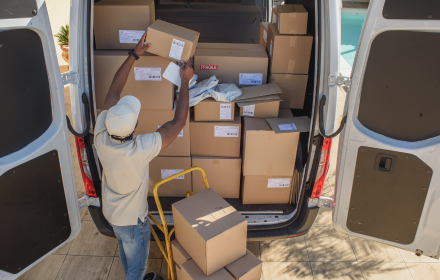
For German businesses importing products from China, door-to-door shipping offers a convenient way to move goods from a supplier in Shanghai to a warehouse, distribution center, or business address in Germany. Instead of arranging separate transportation providers for each stage, importers can coordinate the shipment through one logistics provider.
However, door-to-door shipping involves more than simply moving cargo between two addresses. Businesses need to consider export procedures, international freight, import customs clearance, duties and VAT, and final delivery arrangements.
This guide explains how door-to-door shipping from Shanghai to Germany works, what costs and documents to consider, and how to choose the right shipping solution for your business.
Door-to-door shipping is a logistics service that covers the transportation of goods from a designated pickup address in Shanghai to a specified delivery address in Germany.
Depending on the service arrangement, it may include:
Pickup from the supplier's factory or warehouse
Cargo receiving and handling
Export customs clearance in China
International transportation by sea, air, or rail
Import customs clearance in Germany
Payment or settlement of applicable duties and taxes
Final delivery to the recipient's address
For business importers, the main advantage is simplified coordination. One logistics provider can manage multiple transportation stages, reducing the need to communicate with separate carriers and customs service providers.
Important: Door-to-door describes the delivery scope, not the tax arrangement. A door-to-door shipment is not automatically DDP. Always confirm whether import customs clearance, duties, and VAT are included in the quoted service.
A typical door-to-door shipment follows these steps:
Supplier Pickup: Goods are collected from the supplier's factory or warehouse in Shanghai or the surrounding area.
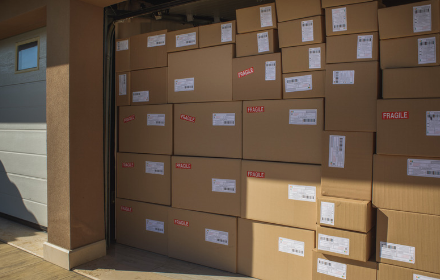
Cargo Receiving: The logistics provider checks the shipment details, carton quantities, dimensions, and gross weight.
Export Preparation: Commercial invoices, packing lists, and other required export documents are prepared.
China Export Customs: The shipment goes through export customs procedures.
International Transportation: Cargo is shipped from China to Germany by sea, air, or rail.
Arrival in Germany: Goods arrive at the designated port, airport, or rail terminal.
Import Customs Clearance: Customs declarations are submitted, and applicable duties and import VAT are assessed.
Final Delivery: After customs release, the goods are transported to the agreed German delivery address.
The exact process depends on the shipping method, cargo type, customs arrangement, and destination address.
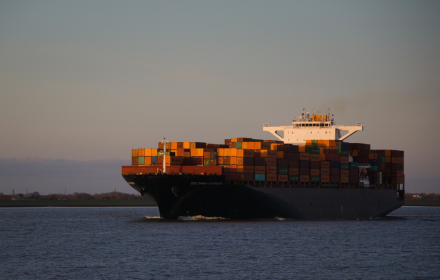
The three main transportation options from Shanghai to Germany are sea freight, air freight, and rail freight.
| Shipping Method | Best For | Main Consideration |
| Sea Freight | Large-volume and heavy cargo | Lower transportation cost per unit for suitable shipments, but longer transit |
| Air Freight | Urgent and high-value goods | Faster transportation, but higher freight cost |
| Rail Freight | Medium-sized shipments | An alternative between air and sea in terms of cost and transit time |
Sea freight is commonly considered for machinery, furniture, industrial materials, and bulk commercial goods. Importers can choose LCL (Less than Container Load) for smaller shipments or FCL (Full Container Load) when the cargo justifies a dedicated container.
Air freight is suitable when delivery speed is a priority, such as for samples, electronics, replacement parts, and urgent inventory replenishment.
Rail freight provides another option for businesses that want to balance transportation time and cost. Availability, routing, cargo restrictions, and final delivery arrangements should be checked before booking.
The best option depends on shipment size, urgency, product characteristics, and the total landed cost—not just the international freight charge.
A door-to-door quote may cover several logistics charges. However, the exact inclusions vary between providers and service terms.
Common cost components include:
| Cost Component | Description |
| China Pickup | Collection from the supplier's location |
| Origin Handling | Warehouse receiving, loading, and handling |
| Export Customs | Export declaration and related service charges |
| International Freight | Sea, air, or rail transportation |
| Destination Handling | Port, airport, or terminal handling |
| Import Customs | Customs declaration and clearance service |
| Import Duty | Customs duty based on the applicable tariff classification |
| Import VAT | German import VAT, where applicable |
| Final Delivery | Transportation to the designated German address |
Before accepting a quote, ask the provider to specify which items are included and excluded.
For example, a quote may include international freight and final delivery but exclude import duties, VAT, customs inspection charges, or additional handling fees.
A detailed quotation makes it easier to compare different providers and estimate the actual landed cost.
Goods imported from Shanghai into Germany must comply with EU and German import regulations.
For most commercial imports, the customs process involves the following:
EORI Number: Businesses importing goods into the EU generally need an Economic Operators Registration and Identification (EORI) number.
HS Code: The product must be classified under the correct customs tariff code.
Customs Value: Customs value is determined according to applicable customs valuation rules, generally including the transaction value and relevant adjustments.
Import Duty: The duty rate depends on the product's tariff classification, origin, and applicable trade measures.
Import VAT: German import VAT is generally 19% for standard-rated goods, while certain products may qualify for a reduced rate.
For example, assume a shipment has a customs value of €10,000 and an illustrative customs duty rate of 5%.
Customs duty: €10,000 × 5% = €500
Simplified VAT calculation base: €10,000 + €500 = €10,500
Import VAT at 19%: €10,500 × 19% = €1,995
Total illustrative duty and import VAT: €2,495
This is a simplified example. The actual VAT assessment base may include additional costs, and the applicable duty rate must be verified using the correct TARIC classification and origin information.
Businesses should also confirm who is responsible for the customs declaration, tax payment, and import documentation before shipping.
DAP and DDP are two common delivery arrangements for international door-to-door shipments. They differ mainly in who handles import clearance and pays import duties and taxes.
| Item | DAP (Delivered at Place) | DDP (Delivered Duty Paid) |
| Supplier's delivery responsibility | To the agreed destination | To the agreed destination |
| Export clearance | Seller | Seller |
| Import customs clearance | Buyer | Seller |
| Import duties | Buyer | Seller |
| Import VAT | Buyer | Seller |
Under DAP, the buyer generally handles import customs clearance and pays applicable import duties and taxes. The seller arranges transportation to the named destination.
Under DDP, the seller takes responsibility for import clearance and applicable duties and taxes, subject to the agreed contractual and legal arrangements.
For German business importers, DAP may be suitable when the company has its own customs broker and established import procedures. DDP may simplify coordination when the buyer prefers a more inclusive service.
However, DDP requires careful verification of the importer-of-record arrangement, VAT responsibilities, and the provider's ability to legally handle the import. DDP does not automatically eliminate a buyer's separate VAT registration or reporting obligations.
Preparing accurate shipping documents helps reduce customs delays and avoid inconsistencies during import clearance.
Common documents include:
| Document | Purpose |
| Commercial Invoice | Shows seller, buyer, product description, quantity, and transaction value |
| Packing List | Details carton quantities, dimensions, and gross/net weight |
| Bill of Lading (B/L) | Sea freight transport document |
| Air Waybill (AWB) | Air freight transport document |
| Rail Transport Document | Evidence of rail transportation |
| EORI Number | Identifies the relevant economic operator for EU customs procedures |
| Product Certificates | Required for certain regulated products |
Depending on the goods, additional documents may be necessary, such as CE-related technical documentation, declarations of conformity, test reports, certificates of origin, or other product-specific compliance documents.
For example, electrical equipment, machinery, toys, batteries, and products in contact with food may have additional regulatory requirements.
Importers should confirm the documentation requirements before the goods leave China rather than waiting until the shipment arrives in Germany.
Transit time depends on the transportation method, routing, carrier schedule, customs processing, and final delivery location.
| Shipping Method | Main Factors Affecting Transit Time |
| Air Freight | Flight availability, airport handling, customs clearance, and delivery |
| Sea Freight | Vessel schedules, port congestion, sailing route, and destination handling |
| Rail Freight | Rail schedules, border procedures, routing, and terminal handling |
It may also include supplier preparation, pickup, warehouse handling, export customs, destination customs clearance, and final-mile delivery.
When planning inventory replenishment, businesses should request an estimated door-to-door schedule and clarify whether the quoted transit time starts from cargo pickup, warehouse receipt, or departure from China.
Even when using a door-to-door service, importers should pay attention to several potential issues.
Incorrect product classification: An inaccurate HS code can lead to incorrect duty calculations, customs queries, or delays.
Incomplete documentation: Differences between the commercial invoice, packing list, and actual cargo details can complicate customs clearance.
Unexpected destination charges: Some quotations exclude terminal handling, inspections, storage, or additional delivery fees.
Product compliance issues: Certain goods require specific documentation or conformity assessments before they can be imported or sold in Germany.
Unclear tax responsibilities: Buyers may assume that door-to-door shipping includes duties and VAT, only to discover that these charges are payable separately.
Delivery restrictions: Warehouses and commercial premises may have limited unloading facilities, delivery-hour requirements, or vehicle access restrictions.
To reduce these risks, provide complete cargo information and confirm all service inclusions before booking.
A reliable logistics provider should be able to coordinate the entire shipment, explain the service scope, and communicate clearly throughout the transportation process.
Before choosing a provider, consider these points:
Route Experience: Does the provider regularly handle shipments from Shanghai to Germany?
Multiple Shipping Options: Can it offer sea, air, and rail solutions based on your cargo?
Customs Support: Can it coordinate export and German import customs procedures?
Transparent Quotation: Are origin charges, destination charges, taxes, and delivery fees clearly explained?
Cargo Handling: Can it handle your product type, dimensions, weight, and packaging requirements?
Shipment Tracking: Can you receive updates from pickup through final delivery?
Delivery Capability: Can it arrange delivery to your factory, warehouse, or distribution center in Germany?
A competitive freight rate is important, but it should not be the only deciding factor. Customs experience, service transparency, and reliable coordination are equally important for business imports.
Door-to-door shipping from Shanghai to Germany can simplify international procurement for German businesses by bringing pickup, export procedures, international transportation, import clearance, and final delivery into one coordinated service.
The right solution depends on your cargo volume, product category, delivery schedule, customs requirements, and preferred tax arrangement. Before booking, compare the complete service scope and landed cost rather than looking at freight charges alone.
For businesses importing from multiple Chinese suppliers or shipping regularly to Germany, working with a China-based 3PL can also help coordinate supplier pickups, cargo consolidation, warehouse handling, and international delivery.
DIDADI Logistics provides China-based logistics and fulfillment solutions for business importers, including supplier pickup, cargo consolidation, international freight, and shipping arrangements to Germany. Importers can share their cargo details and delivery address to check suitable shipping options.
Recommended Reading