


What Is DDP Shipping and Is It Better for E-Commerce Sellers Importing from China?


For e-commerce sellers importing from China, shipping is rarely just a transportation decision. It affects cash flow, delivery speed, customs risk, customer satisfaction, and ultimately how scalable a business can become.
Among the most commonly discussed shipping terms, DDP shipping often stands out as the “easy option.” Sellers hear phrases like “all taxes included” or “door-to-door delivery” and assume it removes most of the complexity of international logistics.
But is DDP actually better for e-commerce sellers?
The answer depends on your business model, shipment volume, compliance needs, and how much control you want over your supply chain. This guide explains what DDP shipping really is, how it works when importing from China, and when it makes sense for online sellers.
DDP stands for Delivered Duty Paid, one of the official Incoterms used in international trade.
Under DDP, the seller (or the logistics provider acting on their behalf) is responsible for delivering goods to the destination country with import duties and taxes already paid.
In practical terms, DDP shipping from China usually includes:
Export handling in China
International freight (air, sea, rail, or express)
Customs clearance in the destination country
Import duty and VAT/GST payment
Final delivery to a warehouse, fulfillment center, or Amazon FBA
For the buyer or e-commerce seller, DDP often feels like receiving a domestic shipment—without dealing directly with customs procedures.
DDP has grown rapidly in popularity because modern e-commerce moves fast, and many sellers do not have internal logistics teams.
For Shopify, Amazon, and marketplace sellers, the appeal is simple:
Fewer steps to manage
Less paperwork exposure
Predictable “all-in” landed cost
Faster onboarding into new markets
Instead of coordinating freight forwarders, brokers, tax registrations, and delivery carriers separately, sellers often prefer a bundled solution.
DDP reduces friction, especially for smaller teams.
DDP shipping is not a single service—it is a structured workflow.
A typical DDP shipment involves several layers:
Origin Side (China)
Goods are picked up from suppliers or consolidated in a warehouse. Export documents such as invoices and packing lists are prepared.
International Transport
The shipment moves by:
Air freight (fast replenishment)
Ocean freight (bulk inventory)
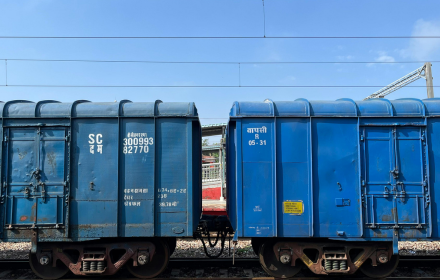
Rail freight (select EU routes)
Express courier (small parcels)
Destination Clearance
The forwarder clears customs using an importer structure, pays duties, and ensures compliance.
Final Delivery
The goods are delivered to:
Amazon fulfillment centers
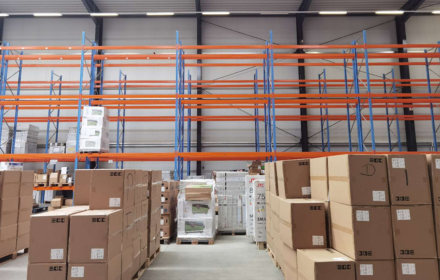
A local 3PL warehouse
A retail distribution hub
Direct-to-consumer fulfillment networks
The seller receives the shipment without needing to act as the importer in many cases.
DDP is often compared with FOB and EXW.
Rather than saying one is always better, it helps to understand the trade-offs.
DDP tends to be better when:
You want simplicity
You are shipping smaller or mid-sized loads
You are entering a new country market
You do not want to manage customs directly
FOB tends to work better when:
You want more cost transparency
You have your own broker or importer setup
You are scaling large shipments regularly
EXW is usually only suitable for experienced importers managing full control from factory pickup.
DDP is not the “best” universally—it is the most hands-off structure.
DDP can provide strong operational benefits when executed correctly.
1. Simplified Customs Handling
Most e-commerce sellers do not want to manage customs entries, tariff classifications, or duty payments. DDP reduces that burden.
2. Predictable Landed Cost
DDP pricing is often bundled, making it easier to forecast product margins and pricing strategies.
3. Faster Market Entry
For sellers expanding into the UK, EU, Canada, or Australia, DDP can reduce the learning curve.
4. Less Administrative Overhead
No need to coordinate multiple service providers for one shipment.
Despite its convenience, DDP is not risk-free.
Bundled Cost Can Reduce Transparency
Because duties, freight, and clearance fees are combined, sellers may not see where cost increases come from.
Compliance Depends on Forwarder Quality
DDP requires the logistics provider to manage import responsibilities correctly. Poor practices can lead to customs issues later.
Less Flexibility Once in Transit
DDP shipments are usually structured end-to-end. Mid-route changes are harder.
Not Ideal for High-Volume Scaling
As shipment volume grows, many brands shift toward FOB models for greater control.
DDP is often the best fit in these scenarios:
New Amazon sellers shipping their first inventory from China
Shopify brands replenishing smaller batches frequently
Businesses without in-house customs expertise
Sellers prioritizing speed and simplicity over granular cost breakdown
For many growing brands, DDP is a bridge between beginner logistics and fully optimized supply chains.
Shipping DDP into Amazon requires extra attention.
Amazon does not act as the importer of record, and shipments must meet strict inbound rules.
Sellers must ensure:
Correct carton labeling
Appointment-compliant delivery
Accurate commercial documentation
Clear responsibility for VAT and duty payments
DDP works well for Amazon FBA only when the origin preparation is done properly.
Many sellers think DDP success depends on customs clearance abroad.
In reality, the most important work happens before the shipment leaves China:
Consolidation across suppliers
Packaging standardization
Correct HS codes and invoice descriptions
Amazon-ready preparation
Strong origin execution reduces downstream delays far more than last-minute fixes at destination.
For e-commerce sellers importing from China, DDP works best when it is supported by structured origin operations rather than treated as a shortcut.
DIDADI Logistics helps online sellers manage consolidation, export preparation, and compliant DDP shipping workflows from China to major markets including the USA, Canada, the UK, the EU, and Australia.
By focusing on predictable execution at origin and alignment with Amazon or 3PL delivery requirements, DIDADI helps sellers reduce shipping friction while scaling international fulfillment with confidence.
DDP shipping is not simply an “easy shipping option.” It is a logistics structure that trades control for simplicity.
For many e-commerce sellers importing from China, DDP can be the right choice—especially during early growth stages or when operational resources are limited.
However, sellers should understand the cost structure, compliance responsibilities, and scalability limits before relying on DDP long-term.
When used intentionally, with the right logistics partner and strong origin coordination, DDP becomes a powerful tool for global e-commerce expansion.
Recommended Reading