


Consolidating Goods in China and Shipping to the USA: A Complete Guide for Importers


For many US-based importers and eCommerce sellers, sourcing from China does not mean working with a single factory. Product lines are often split across regions, suppliers specialize in different components, and production schedules rarely align perfectly. While this sourcing model offers flexibility and cost advantages, it creates a major operational challenge once products are ready to ship.
Without a consolidation strategy, sellers quickly find themselves managing multiple outbound shipments, inconsistent arrival times, and limited visibility into what inventory is actually moving. Consolidating goods in China before shipping to the USA is not just a logistics tactic—it is a structural decision that shapes cost control, delivery reliability, and long-term scalability.
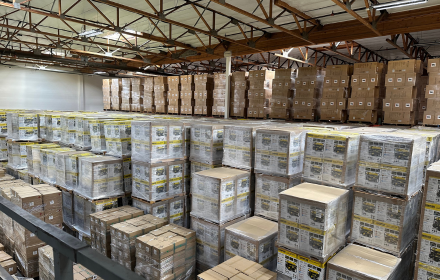
Goods consolidation in China refers to the process of collecting products from multiple suppliers and assembling them at a centralized location before international shipment. However, the real function of consolidation goes beyond physical storage.
Consolidation introduces a planning layer between production and export. Instead of reacting to factory completion dates, sellers gain the ability to align shipping schedules with demand forecasts, promotional cycles, and warehouse capacity in the USA.
This centralized approach also creates a single point of accountability at origin. Rather than coordinating with multiple factories for export details, sellers can manage outbound shipments as a unified operation.
At first glance, shipping directly from factories to the USA appears faster and simpler. In practice, this approach often increases complexity rather than reducing it.
Each factory operates on its own timeline, packaging standards, and documentation habits. When shipments move independently, sellers face inconsistent transit times and fragmented customs paperwork. Inventory arrives in the USA in scattered batches, making replenishment planning more reactive than strategic.
Over time, these small inefficiencies accumulate. Sellers may overstock some SKUs while running out of others, not because of poor demand forecasting, but because shipments were never synchronized at origin.
Freight efficiency is not only about choosing a shipping method; it is about structuring shipments in a way that uses space, weight, and timing effectively.
By consolidating goods, sellers can combine shipments to improve container utilization, reduce partially filled loads, and make more informed decisions between LCL and FCL ocean freight. For air freight, consolidation helps offset minimum chargeable weights by spreading costs across more units.
The result is not always a lower per-shipment cost, but a more predictable and sustainable freight structure that supports long-term growth.
Although workflows vary, consolidation generally follows a structured sequence.
Factories deliver finished goods to a central warehouse as production is completed, not based on shipping urgency. Inventory is checked in, organized by SKU, and grouped according to shipment plans.
Once all required goods are received, shipments are assembled based on destination, shipping method, and delivery priority. Export documentation is prepared using unified data, reducing discrepancies and delays during customs clearance.
This staged process creates clarity at every step before goods leave China.
Consolidation is especially valuable in situations where complexity increases faster than shipment volume.
Typical scenarios include:
Brands sourcing different SKUs from specialized factories
Products assembled from multiple components
Sellers shipping to both Amazon FBA and US-based warehouses
Shopify or DTC brands scaling from test orders to regular replenishment
As the number of suppliers grows, the absence of consolidation often becomes the biggest source of operational friction.
Although workflows vary, consolidation generally follows a structured sequence.
Factories deliver finished goods to a central warehouse as production is completed, not based on shipping urgency. Inventory is checked in, organized by SKU, and grouped according to shipment plans.
Once all required goods are received, shipments are assembled based on destination, shipping method, and delivery priority. Export documentation is prepared using unified data, reducing discrepancies and delays during customs clearance.
This staged process creates clarity at every step before goods leave China.
One of the key advantages of consolidation is flexibility. Sellers are not locked into a single shipping method.
Ocean freight can be optimized between LCL and FCL depending on volume fluctuations. Air freight can be used selectively for fast-moving SKUs while slower items move by sea. In some cases, mixed shipping strategies allow sellers to balance speed and cost without splitting supplier coordination.
This adaptability becomes increasingly important as sales channels and customer expectations evolve.
Amazon FBA requirements add another layer of complexity to international shipping. Labeling, carton content rules, and inbound shipment planning must be executed precisely.
Handling these requirements at multiple factory locations increases the risk of errors. Consolidation allows FBA preparation to be managed centrally, ensuring consistency across shipments.
It also enables sellers to allocate inventory strategically across Amazon fulfillment centers, reducing inbound delays and improving sell-through performance once inventory is live.
One of the most overlooked benefits of consolidation is visibility.
When inventory remains at factories, sellers rely on production updates rather than physical confirmation. Consolidation places inventory in a controlled environment where quantities, readiness, and shipment status can be verified.
This visibility allows sellers to make informed decisions about shipment timing, channel allocation, and replenishment frequency—before goods enter international transit.
Many logistics issues originate before goods ever leave China. Inconsistent packaging, documentation errors, and misaligned shipment data are common causes of downstream delays.
Centralized consolidation helps reduce these risks by standardizing outbound processes. Issues can be identified and resolved at origin, where corrections are faster and less costly than after arrival in the USA.
This proactive approach significantly reduces unexpected disruptions in the later stages of the supply chain.
Consolidation is not mandatory in every case. Single-supplier shipments or extremely small, urgent orders may move more efficiently through direct shipping.
However, as product variety and order frequency increase, direct shipping often becomes a bottleneck. What starts as a shortcut can quickly limit scalability.
Evaluating consolidation should be based on supply chain complexity, not just shipment size.
Consolidating goods in China before shipping to the USA is not simply about reducing freight costs. It is about restoring structure, visibility, and predictability to an increasingly fragmented sourcing environment.
For importers and eCommerce sellers working with multiple Chinese suppliers, consolidation transforms scattered production into coordinated export—laying a stronger foundation for fulfillment efficiency and long-term growth.
DIDADI Logistics supports US importers by providing centralized consolidation services in China, enabling sellers to manage multi-supplier inventory before international shipping.
By acting as a single origin hub, DIDADI helps streamline export coordination, improve shipment planning, and create greater visibility and control before goods enter transit to the USA.
Recommended Reading