


Train Shipping from China to Germany | Rail Freight Guide


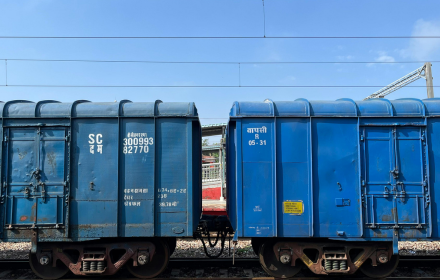
For businesses importing goods from China to Germany, rail freight is an important alternative to both ocean and air shipping. China-Europe freight trains connect major Chinese logistics hubs with Germany and other European markets, offering a balance between transit time and transportation cost.
For importers who need faster transportation than sea freight but do not want to pay air freight rates, train shipping from China to Germany can be a practical option.
This guide explains how rail freight from China to Germany works, how long it takes, what goods are suitable, how customs clearance works, and when rail freight may fit your supply chain.
Train shipping from China to Germany uses international rail freight services to move containers or consolidated cargo across China, Central Asia, Eastern Europe and Germany.
It is commonly operated as part of the China-Europe Railway Express, a large international rail network connecting Chinese cities with destinations across Europe. As of 2026, the network connects more than 200 European cities, with Germany among its major destinations.
Major German destinations and logistics hubs include:
Duisburg
Hamburg
Frankfurt
Munich
Other German inland logistics terminals
The exact route depends on the departure city in China, destination, cargo type, available rail service and the logistics provider.
For example, a shipment may move from a Chinese factory or warehouse to a railway terminal, travel through the Eurasian rail network, arrive at a European terminal, clear customs, and then continue by truck to the final German address.
Transit time depends on the origin, destination, route, customs procedures and final delivery arrangements.
As a general planning range, rail freight from China to Germany often takes around 15–25 days, while specific scheduled services can be faster.
For example, official Chinese sources reported that the full journey between Xi'an and Duisburg can be completed in as little as 11 days under certain services.
Rail transit times should therefore be treated as an estimated range rather than a guaranteed delivery date.
The total logistics time can include:
Supplier pickup
Export customs clearance
Pre-carriage to the railway terminal
International rail transportation
Border and transit procedures
Arrival handling
Import customs clearance
Final-mile trucking
For importers planning inventory replenishment, it is important to consider the complete door-to-door transit time, rather than looking only at the international rail journey.
There is no single fixed rail route from China to Germany. Different services can depart from different Chinese cities and use different Eurasian corridors.
Common departure locations include:
Xi'an
Chongqing
Chengdu
Zhengzhou
Wuhan
Changsha
Guangzhou
Shenzhen
Other major Chinese logistics hubs
German destinations can include Duisburg, Hamburg and other logistics terminals.
Duisburg is particularly important for China-Europe rail logistics because of its position as a major European inland logistics hub.
Route selection can depend on the location of your supplier, available train schedules, cargo volume, destination and the required delivery service.
Rail freight is commonly used for commercial cargo such as:
Electronics
Machinery
Auto parts
Electrical equipment
Industrial products
Furniture
Consumer goods
E-commerce inventory
General merchandise
Official data on China-Europe freight trains shows that transported goods include automobiles and auto parts, machinery, electronics and electrical equipment, as well as many other categories.
However, not every product can automatically be shipped by rail.
Some products may require additional documentation, special packaging, permits or specific transportation arrangements. Dangerous goods, batteries, chemicals, liquids and other regulated cargo should be checked before booking.
If you are unsure whether your product is suitable for rail transportation, provide the product name, photos, material, weight, volume and relevant specifications to your freight forwarder for confirmation.
For many importers, the main comparison is between rail and sea freight.
| Factor | Rail Freight | Ocean Freight |
| Transit time | Faster | Slower |
| Cost | Medium | Lower for large volumes |
| Best for | Medium-value, time-sensitive cargo | Large-volume shipments |
| Schedule | Depends on rail service | Regular sailing schedules |
| Carbon footprint | Generally lower than air | Generally low per kg for large volumes |
| Door-to-door | Available with trucking | Available with trucking |
| Inventory replenishment | Suitable | Suitable for planned replenishment |
Rail can be useful when your inventory cannot wait for a longer ocean transit time but air freight would be too expensive.
Ocean freight can remain more economical for large-volume shipments where transportation cost is the main consideration.
The right choice depends on your cargo volume, inventory requirements, budget and delivery deadline.
Rail and air freight serve different logistics requirements.
| Factor | Rail Freight | Air Freight |
| Speed | Medium | Fast |
| Cost | Lower than air | Higher |
| Cargo volume | Medium to large | Small to medium |
| Best for | Regular commercial shipments | Urgent or high-value goods |
| Inventory planning | Good | Good for urgent replenishment |
| Weight restrictions | Generally more flexible | Airline restrictions apply |
Air freight is usually selected when speed is the priority.
Rail freight provides a middle option for businesses that need a shorter transit time than ocean freight without moving the entire shipment by air.
Rail freight rates are not fixed.
The cost of shipping from China to Germany depends on factors such as:
Origin city
Destination
Cargo weight
Cargo volume
Container type
FCL or LCL
Commodity
Customs requirements
Rail route
Fuel and operational surcharges
Terminal charges
Final-mile delivery
Insurance
Incoterms
For this reason, a freight forwarder normally needs shipment details before providing an accurate quotation.
For an initial quotation, prepare:
Product type + total weight + total volume + origin + final delivery address
If you have multiple suppliers in China, consolidation may also be considered before the rail shipment is arranged.
Rail freight can be arranged for different shipment sizes.
FCL Rail Freight
FCL means Full Container Load.
Your cargo occupies a dedicated container, although you do not necessarily have to fill the container completely.
FCL is generally suitable for larger shipments and can simplify cargo handling by reducing the number of times the goods are consolidated or deconsolidated.
LCL Rail Freight
LCL means Less than Container Load.
Cargo from different shippers is consolidated into a container.
LCL can be considered when your shipment is not large enough to justify a full container.
The choice between FCL and LCL depends on cargo volume, cost, destination and the available service.
Rail transportation does not necessarily mean that your cargo stops at the railway terminal.
A complete door-to-door service can include:
Supplier → China Warehouse → Export Customs → Railway Terminal → China-Europe Rail → European Terminal → Import Customs → Trucking → German Final Address
This is especially useful for importers who do not want to coordinate separate transportation companies for each stage.
A freight forwarder can coordinate the different stages and provide a single logistics solution.
For e-commerce businesses, the final destination may be:
Amazon FBA warehouse
3PL warehouse
E-commerce fulfillment center
Company warehouse
Retail warehouse
Commercial address
The exact service available depends on the destination and customs arrangement.
Customs clearance is an important part of international rail freight.
When goods enter the EU, they must go through the applicable customs procedures before they can freely circulate within the EU customs territory.
Businesses involved in EU customs operations generally need an EORI number, which is used to identify economic operators for customs procedures such as import, export and transit.
Importers should also prepare accurate information about:
Product description
HS/CN code
Customs value
Country of origin
Quantity
Commercial invoice
Packing list
Transport documents
Required certificates or permits
The EU uses the Combined Nomenclature (CN) for tariff classification, and the classification can affect applicable duties and requirements. Certain products may also be subject to restrictions or licensing requirements.
For shipments entering the EU, advance cargo security information is also part of the customs framework through systems such as ICS2 and the Entry Summary Declaration (ENS).
DIDADI Logistics provides international logistics and fulfillment services for businesses importing from China to Germany and other European markets.
Depending on your shipment requirements, services can include:
China warehouse consolidation
Rail freight from China to Europe
Ocean freight
Air freight
DDP shipping
Customs clearance
Amazon FBA preparation
E-commerce fulfillment
Pick and pack
Warehousing
Door-to-door delivery
Our logistics team can evaluate your shipment based on the product type, weight, volume, origin and final destination, then recommend a suitable transportation solution.
For regular importers and e-commerce businesses, rail freight can also be combined with China warehousing and European fulfillment to create a more flexible supply chain.
Recommended Reading