

How Much Does It Cost to Ship a 20ft or 40ft Container from China to Germany?


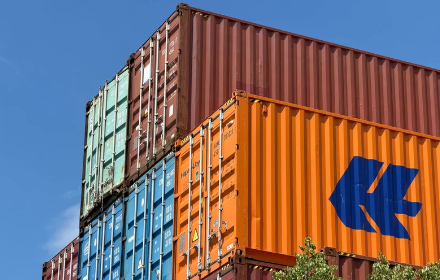
Shipping a full container from China to Germany is a common choice for importers, wholesalers, manufacturers, and e-commerce businesses purchasing goods in bulk. However, the cost of shipping a 20ft or 40ft container depends on more than the ocean freight rate.
The departure port in China, destination port in Germany, container type, cargo details, customs duties, and final delivery location all affect the total cost.
This guide compares 20ft and 40ft container shipping costs from China to Germany, explains the main charges, and shares practical ways to reduce your total shipping expenses.
The cost of shipping a container from China to Germany varies with market conditions, shipping routes, and service requirements.
As an indicative October 2026 reference, published estimates for sea freight to Germany show the following port-to-port rates. Actual quotations may differ by carrier, departure port, and booking date.
| Container Type | Indicative Ocean Freight Cost |
| 20ft Standard Container (20GP) | US$2,160–$2,640 |
| 40ft Standard Container (40GP) | US$3,330–$4,070 |
| 40ft High Cube Container (40HQ) | US$3,330–$4,070 |
These figures are ocean freight estimates, not guaranteed rates or complete door-to-door prices. Origin handling, German destination charges, customs clearance, import duties, VAT, and inland delivery may be additional.
For an accurate quotation, provide your China pickup address, German destination, cargo details, and required shipping terms.
Choosing the right container depends on cargo volume, weight, dimensions, and loading requirements.
| Container Type | Approx. Internal Volume | Best For |
| 20GP | 33 CBM | Smaller full-container shipments |
| 40GP | 67 CBM | Larger commercial shipments |
| 40HQ | 76 CBM | Bulky, lightweight cargo |
Actual usable loading volume depends on cargo dimensions, packaging, pallet configuration, and loading efficiency.
A 40ft container offers roughly twice the internal volume of a 20ft container, but it does not necessarily have twice the payload capacity. Heavy cargo may reach weight limits before the container is full.
For furniture, home goods, packaging materials, and other bulky products, a 40HQ container may provide more usable space. For dense products, a 20GP container may be more suitable.
China has several major export ports serving Germany. The best departure port depends on where your suppliers are located and which shipping services are available.
| Chinese Port | Common German Destination | Suitable For |
| Shanghai | Hamburg | East China suppliers |
| Ningbo | Hamburg | Zhejiang and nearby manufacturers |
| Shenzhen / Yantian | Hamburg or Bremerhaven | South China suppliers |
| Qingdao | Hamburg or Bremerhaven | Shandong and North China suppliers |
| Guangzhou / Nansha | German ports via available services | Guangdong suppliers |
Ocean freight rates can vary between ports, even when the final destination is the same.
For example, shipping from a nearby port may reduce domestic trucking costs, while a different port may offer a more competitive ocean freight rate.
Compare the total origin-to-destination cost, rather than choosing a port based only on its advertised sea freight price.
The ocean freight rate is only one part of the total shipping expense.
A typical full-container shipment may include the following charges:
| Cost Item | What It Covers |
|---|---|
| China pickup | Trucking from the supplier to the port or warehouse |
| Origin charges | Terminal handling, documentation, and export-related fees |
| Ocean freight | Transportation from China to Germany |
| German destination charges | Terminal handling, release fees, and other applicable port charges |
| Customs clearance | Customs broker and import declaration services |
| Import duty | Based on the product classification and applicable tariff |
| Import VAT | German import VAT, generally 19% for standard-rated goods |
| Inland delivery | Trucking from the German port to the final address |
| Additional charges | Storage, inspections, demurrage, or detention when applicable |
Not every quotation includes all these items. Some freight forwarders quote port-to-port transportation only, while others offer door-to-door or DDP services.
Ask for an itemized quotation to avoid unexpected charges after the container arrives in Germany.
Door-to-door shipping includes more than moving a container between two ports.
Depending on the service scope, it may include:
Pickup from the supplier in China
Export customs clearance
Origin handling
Ocean freight
German import customs clearance
Destination handling
Trucking to the final address
The final price depends on the pickup location, destination postcode, container type, cargo, and whether duties and taxes are included.
For example, delivering a container to a warehouse near Hamburg may cost less than transporting it to a destination in southern Germany.
When comparing door-to-door quotations, confirm whether the price includes only transportation and clearance or also import duties and VAT. These are different cost components.
DDP (Delivered Duty Paid) shipping is an option for importers who want a logistics provider to coordinate transportation and import-related arrangements under an agreed service scope.
A DDP quotation may cover:
China pickup and export clearance
Ocean freight
German customs clearance
Applicable import duties
Import VAT
Final delivery
However, inclusions vary by provider and contract. Always confirm which charges are included and who is responsible for the import declaration.
Import duty depends on the product's HS code, customs value, and applicable tariff measures. Germany's standard VAT rate is generally 19%, although different VAT treatment may apply to certain goods.
For VAT-registered businesses, import VAT recovery may be possible if the relevant legal and documentation requirements are met. Therefore, DDP is not automatically the cheapest option for every importer.
Compare the total cost and tax arrangements before choosing between DDP and other shipping terms.
Sea freight is generally suitable for importers who prioritize cost over speed.
A typical planning estimate for port-to-port sea freight is approximately 25–40 days, although the actual transit time depends on the route, vessel schedule, transshipment, and operating conditions.
The overall door-to-door process may take longer because of:
Factory pickup and export preparation
Waiting for vessel departure
Port handling
Customs clearance
Inland trucking
Delivery scheduling
If your inventory is time-sensitive, ask the freight forwarder for the estimated sailing date, port-to-port transit time, and expected final delivery window.
Do not assume that the quoted ocean transit time represents the entire shipping process.
The right container depends on your cargo volume, weight, and total shipping cost.
A 20ft container may be suitable when you have a smaller shipment that still justifies a full container.
A 40ft container is generally better for larger shipments because it provides more space without requiring twice the ocean freight cost of a 20ft container.
Before deciding, compare:
Total cargo volume in CBM
Gross weight
Container payload limits
Loading and unloading requirements
Ocean freight for each container size
Origin and destination charges
Inland trucking costs
For bulky products, a 40HQ container may offer better space utilization. For heavy goods, a 20GP container may be more practical.
If your cargo does not require a full container, compare LCL (Less than Container Load) shipping before booking FCL.
Import duties and VAT should be considered separately from the freight quotation.
Customs duty depends on the product's tariff classification, customs value, country of origin, and any applicable trade measures.
For many standard-rated goods, German import VAT is 19%. The VAT calculation generally takes account of the customs value, import duties, and relevant incidental expenses under applicable rules.
For illustration, assume the following:
Customs value: €10,000
Import duty: €500
Other costs included in the VAT base: €500
The illustrative VAT base would be €11,000, giving import VAT of €2,090 at 19%.
This example is for explanation only. Actual customs valuation, duty rates, VAT treatment, and included expenses must be determined for the specific shipment.
Before shipping, verify the correct product classification and applicable duty using the EU TARIC database.
Importers can reduce logistics expenses by comparing the complete shipment cost rather than focusing only on ocean freight.
Useful strategies include:
Choose the nearest practical port: Reduce unnecessary domestic transportation.
Optimize container loading: Use available space efficiently without exceeding weight limits.
Compare 20GP, 40GP, and 40HQ: Select the container that matches your cargo profile.
Consolidate supplier orders: Combine goods from different factories when practical.
Book with suitable lead time: Avoid unnecessary premium services and last-minute arrangements.
Compare itemized quotations: Identify destination charges and excluded services.
Prepare customs documents early: Reduce the risk of delays, storage, and additional handling costs.
Confirm the final delivery address: Inland transportation can significantly affect the total price.
If you source goods from multiple Chinese suppliers, a China-based 3PL warehouse can receive and consolidate your products before loading the container.
This can simplify coordination and help you manage cargo quantities, packing details, and export arrangements.
To receive an accurate FCL quotation, prepare the following information:
| Required Information | Example |
|---|---|
| Pickup location | Guangzhou, China |
| Destination | Hamburg, Germany, or a final delivery postcode |
| Container type | 20GP, 40GP, or 40HQ |
| Product description | Furniture, household goods, machinery |
| Total weight | Gross cargo weight |
| Cargo volume | Total CBM |
| Loading arrangement | Floor-loaded or palletized |
| Shipping terms | FOB, EXW, CIF, DAP, or DDP |
| Customs information | HS code and available product documentation |
| Delivery requirements | Port pickup or door-to-door delivery |
The more accurate your information, the easier it is for the forwarder to compare routes and calculate the complete cost.
If the cargo contains batteries, magnets, chemicals, branded goods, or other regulated products, disclose this information before booking. Additional documentation or restrictions may apply.
DIDADI Logistics provides China-based 3PL and international shipping solutions for businesses importing products from China to Germany and other European markets.
Depending on the shipment requirements, services may include:
Supplier pickup and China warehouse receiving
Cargo consolidation
FCL and LCL shipping
Sea, air, and rail freight
Export customs clearance arrangements
DDP shipping coordination
German warehouse delivery
Logistics support for e-commerce inventory
For businesses sourcing from several suppliers, consolidation can simplify container planning and reduce the need to coordinate multiple independent shipments.
To request a quotation for a 20ft or 40ft container, provide your pickup location, German destination, container type, product details, cargo weight, and preferred shipping terms.
A detailed quotation should distinguish ocean freight, origin charges, destination charges, customs-related costs, and inland delivery so you can evaluate the total logistics budget.
The cost of shipping a 20ft or 40ft container from China to Germany depends on the departure port, container type, shipping date, cargo details, and final delivery requirements.
A 20ft container can suit smaller full-container shipments, while a 40ft or 40HQ container may offer better value for larger or bulkier cargo.
Most importantly, do not compare container shipping prices by ocean freight alone. Origin handling, German destination charges, customs duties, import VAT, and inland delivery can all affect the final cost.
Compare complete quotations, prepare customs information early, and choose the container that best matches your cargo. This approach can help you manage shipping costs and avoid unnecessary expenses when importing from China to Germany.
Recommended Reading